The Data-Driven Audit: Using Analytics to Spot Risk Before It Hits
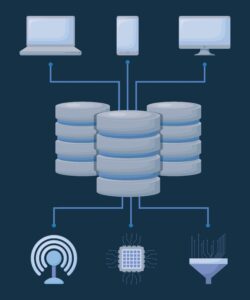
Analytics transforms internal audit by testing entire populations, detecting procurement schemes, compliance violations, and access control failures before losses escalate.

A senior accountant at Tesco filed a report in September 2014 warning that employees were “pulling forward” future income from suppliers to meet targets. The practice had inflated profits by £263 million. His team was, in his words, “falling apart” under the pressure. PricewaterhouseCoopers had already flagged concerns about commercial revenue recording, but the manipulations continued. Traditional audit sampling had reviewed transactions individually without detecting the systematic pattern hiding in plain view. A data-driven audit analyzing the complete population of supplier transactions would have surfaced the anomaly immediately.
This is not a story about inadequate controls. It is a story about the fundamental limitations of sample-based auditing in an era when fraudsters understand statistical testing better than many auditors do. Analytics promises to change that equation by analyzing entire populations rather than fragments. Yet adoption across internal audit functions remains patchy, implementations frequently fail, and many organizations continue testing thin slices of activity while risks flourish in the untested majority.
Why Traditional Audit Sampling Fails to Detect Risk
Traditional internal audits examine thin transaction slices, drawing conclusions about populations from fragments. A team might review 50 expense reports from 5,000 submissions or test 30 vendor payments from 10,000 invoices. This approach made sense when manual examination was unavoidable. The data-driven audit eliminates these limitations entirely, with algorithms analyzing complete datasets faster than humans review samples.
Fraudsters grasp this intimately. They structure schemes below approval thresholds, time activities around audit cycles, and exploit the statistical certainty that most transactions will never face scrutiny. Organizations that actively seek fraud through methods like internal audit experience shorter scheme durations and lower losses than those relying on passive detection, yet tips remain the most common detection mechanism at 43% of cases. When your best fraud detection system is an anonymous hotline rather than your control testing, you have a methodology problem.
Organizations routinely accept 5% annual revenue losses to fraud, with average losses per case reaching $1.7 million. Passively detected schemes generate higher losses and longer durations than actively detected ones. Waiting for fraud to announce itself proves expensive. Yet internal audit teams continue operating as if comprehensive population testing remains out of reach.
At Wirecard, Ernst & Young issued clean audit opinions for years while €1.9 billion in cash that “probably didn’t exist” sat on the balance sheet. The auditors may have failed for three consecutive years to properly confirm that money Wirecard claimed was in a Singapore bank account actually existed. This was not sophisticated deception. It was confirmation fraud, a risk that analytics could flag automatically by cross-referencing stated balances against payment flows and transaction patterns.
How a Data-Driven Audit Catches Fraud Earlier
The shift from sampling to population-wide testing transforms audit effectiveness fundamentally. Organizations implementing continuous controls monitoring report substantial improvements, with some achieving 60% reductions in audit preparation time while simultaneously identifying control failures as they occur rather than discovering breaches months later. This is what separates a data-driven audit from traditional approaches: the ability to test everything, not just samples.
Access management demonstrates the difference clearly. Traditional approaches require auditors to manually test samples of system permissions. Continuous monitoring automates this entirely, flagging terminated employees retaining system access or staff with permissions exceeding role requirements. The system tests 100% of accounts continuously rather than sampling periodically.
A manufacturing firm deployed network analysis to visualize connections between employees, vendors and transactions. The tool immediately surfaced a procurement manager approving invoices from three suppliers sharing identical bank account details. Traditional testing had sampled transactions individually, missing the relationship visible only through population-wide analysis. The kickback scheme had operated undetected for 18 months, bleeding $2.3 million.
Expense policy compliance offers another example. Analytics detects patterns invisible to human reviewers: employees consistently submitting expenses just below approval thresholds, vendors receiving split payments that individually stay beneath competitive bidding requirements, multiple staff booking identical meal charges. These patterns signal risks that sample testing cannot reliably surface, but full population analytics flags automatically.
Overcoming Barriers to Analytics Implementation
Despite proven benefits, analytics adoption remains uneven. The 2024 State of Internal Audit Trends Report found that while 21% of organizations use data analytics for all audits, another 22% use it sparingly or not at all.
The gap stems less from technology costs than from organizational readiness. Many firms discover their data scattered across incompatible platforms, requiring significant integration work before analytics deliver value. One in four audit functions consider their funding insufficient to meet growing demands.
Skill development presents another hurdle. Data literacy, statistical understanding and automation expertise have become essential alongside traditional audit knowledge. More than two-thirds of internal audit leaders report significant recruiting challenges including lack of competencies and missing specialized experience.
Yet the most significant barrier may be cultural. Continuous monitoring strikes some business units as surveillance rather than assurance. Managers who previously knew when auditors would arrive suddenly face persistent oversight. Successful implementations emphasize partnership, demonstrating how analytics helps management identify operational inefficiencies alongside compliance issues.
The lesson from failures is consistent: organizations that treat analytics as a software purchase rather than a capability-building exercise struggle. Those that invest in data infrastructure, skill development and stakeholder engagement succeed.
Where a Data-Driven Audit Detects Hidden Compliance Risks
Procurement represents particularly fertile ground. Graph analytics visualizes supplier relationships, surfacing connections that merit investigation. A financial services firm used this approach to identify suspicious patterns in vendor payments. What emerged was a web of companies with different names and addresses but overlapping ownership structures and bank accounts. The scheme had persisted for three years.
Payment fraud remains problematic, with 79% of organizations experiencing payment fraud attacks or attempts in 2024. Business email compromise accounted for 63% of reported fraud avenues, while check fraud affected 63% of organizations. Transaction monitoring solutions can detect these patterns, identifying duplicates, routing anomalies and behavioral changes that indicate compromise.
Compliance monitoring has evolved from periodic checking to continuous validation. Organizations must now demonstrate ongoing adherence to multiple frameworks simultaneously. Analytics platforms map controls to applicable requirements, automate evidence collection and provide real-time compliance dashboards showing gaps requiring attention.
Common Mistakes That Cause Analytics Projects to Fail
Most analytics initiatives fail not from technical limitations but from predictable mistakes. Organizations underestimate data quality requirements. They purchase sophisticated tools before establishing basic data governance. They deploy analytics without training auditors to interpret results.
The most common failure mode involves treating analytics as an audit tool rather than an organizational capability. Successful implementations recognize that internal audit may lead the charge, but the infrastructure and skills required extend far beyond the audit function. IT must be involved from the start. Data management teams must establish quality standards.
Another frequent misstep involves insufficient change management. Organizations deploy continuous monitoring without preparing stakeholders for persistent oversight. Without proper communication and phased rollout, resistance undermines adoption.
The solution involves starting narrow and proving value before expanding. Vendor duplicate payment checking, segregation of duties monitoring and system access reviews represent common starting points with straightforward implementation paths. Demonstrate success, build confidence, then expand scope methodically.
Data quality determines everything. Analytics built on flawed data produces misleading results that undermine stakeholder confidence. Organizations must establish data governance frameworks ensuring information accuracy before attempting sophisticated analysis. The boring work of data validation matters more than algorithm sophistication.
Why Internal Audit Must Adopt Analytics Now
The internal audit profession confronts an uncomfortable reality. Traditional methodologies that served adequately for decades now prove insufficient. SEC enforcement data from fiscal year 2024 shows that while case volumes dropped 26% to 583 actions, penalties reached record levels, with organizations demonstrating effective self-reporting receiving favorable treatment. This creates powerful incentives for proactive risk detection that sample-based auditing cannot deliver.
Meanwhile, a 42% increase in compliance audits reflects new regulations that organizations must address with largely flat resources. Technology offers the solution, but only for organizations willing to fundamentally rethink their approach. This requires more than purchasing software. It demands investment in data infrastructure, skill development and process redesign.
Organizations that master data-driven audit methodologies detect problems before they metastasize, provide proactive insights that shape strategy, and demonstrate to boards that risk management operates at a sophistication level matching business complexity. Those clinging to sample-based approaches will find themselves perpetually reacting to problems that comprehensive analytics could have flagged months earlier.
The data-driven audit is not the future. It is the present that many organizations have not yet recognized. The question is not whether to adopt these approaches, but how quickly your organization can build the capabilities before the next Tesco or Wirecard makes you wish you had started sooner.